
















Pakistan has quietly begun mediating between Libya’s rival eastern and western power centres in an effort that could significantly raise Islamabad’s diplomatic profile if successful, according to a Reuters report citing two Pakistani sources familiar with the matter.
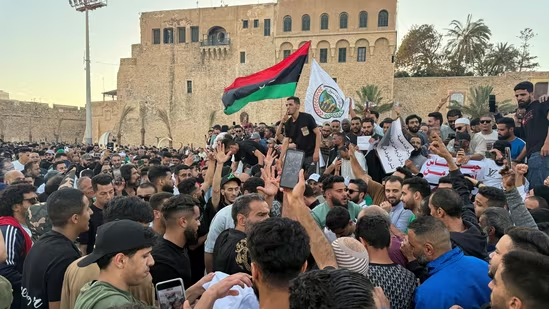
The mediation comes as international efforts to end Libya’s long-running political divide gather pace. The North African nation has remained split between rival administrations in the east and west since the civil war that followed the 2011 NATO-backed uprising that overthrew longtime ruler Muammar Gaddafi.
According to the Reuters report, the United States is “fully aware and involved” in Pakistan’s role, while Saudi Arabia is also backing the initiative. Qatar and Turkey have similarly encouraged Islamabad to take on a mediation role, the Pakistani sources said.
Pakistan’s foreign ministry, military media wing, Libyan officials, and the foreign ministries of the US, Saudi Arabia, Qatar and Turkey did not immediately respond to Reuters’ requests for comment.
Proposed Libya reunification plan
Reuters reported that a summary of a proposed “Libya Reunification Plan” outlines a 36-month transitional power-sharing arrangement under a body called the Government of National Consensus and Presidential Council.
Under the proposal, which is still under discussion, Abdulhamid Dbeibah, the prime minister of the UN-recognised western-based Government of National Unity (GNU), would continue as prime minister during the transition.
Saddam Haftar, deputy commander of the eastern-based Libyan National Army (LNA), would become chairman of the Presidential Council. His father, Khalifa Haftar, whose forces control several of Libya’s largest oilfields and strategic infrastructure, would oversee the country’s budget under the proposed arrangement.
One Pakistani source told Reuters that Islamabad would play “an active role in making sure this whole arrangement stays in play”, although negotiations are continuing.
Pakistan’s growing diplomatic footprint
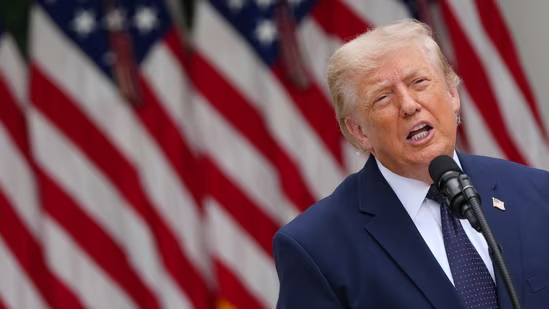
The report comes months after Pakistan was credited by the administration of US President Donald Trump for helping facilitate separate diplomatic engagement between Washington and Iran.
According to Reuters, Pakistan’s Libya mediation efforts began late last year after both Libyan factions sought Islamabad’s involvement.
Last month, Pakistan Army chief General Asim Munir met Saddam Haftar in Rawalpindi. Days later, Haftar travelled to Washington, where he met US Secretary of State Marco Rubio.
Following the meeting, the US State Department said Rubio welcomed efforts by Libyan leaders to overcome divisions and reaffirmed Washington’s support for Libyan unity.
Why Libya remains divided
Libya has struggled to establish a unified government since the fall of Muammar Gaddafi in 2011. Rival governments and armed factions backed by competing foreign powers have repeatedly derailed attempts to hold national elections and reunify state institutions.
Analysts told Reuters that any lasting settlement would have to address disputes over oil revenues, political appointments and election rules, while balancing the interests of external players including the US, Turkey, Egypt, the United Arab Emirates and Saudi Arabia.
Pakistan has maintained ties with both rival Libyan camps. Reuters had earlier reported that Islamabad explored defence cooperation with the eastern-based LNA, including the possible sale of JF-17 fighter jets and Super Mushshak trainer aircraft despite a UN arms embargo.
At the same time, the western-based GNU has also sought direct talks with Pakistan, according to an unpublished document reviewed by Reuters.
However, experts cautioned that even if an agreement is reached, there is no guarantee it will endure, given the repeated collapse of previous peace initiatives in Libya.


