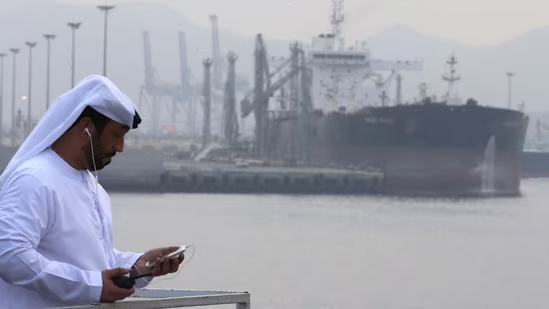























The UAE’s exit from OPEC is as much about oil as about the future of intra-GCC and intra-Arab relations. OPEC’s interests (read Saudi Arabia’s) have ceased to align with Abu Dhabi’s. Hit by Iranian missiles and drones more severely than Israel, the UAE has long chafed at the insipid response of its GCC and Arab partners. After years of weighing such a break, it has moved from intent to action, hinting at the path it will take in the post-war West Asia.
The timing was telling. Even as GCC leaders convened in Jeddah on 28 February for their first summit since war erupted, announced its exit almost in parallel. With Crown Prince Mohammed bin Salman chairing the summit, the UAE was represented by a Deputy PM Abu Dhabiand Foreign Minister Sheikh Abdullah bin Zayed. In Abu Dhabi, Energy Minister Suhail Al Mazroui denied any link to Saudi Arabia, whom he called a “brother,” and praised wartime solidarity. The reality was harder to conceal.
As OPEC’s third-largest producer, the UAE’s departure has considerably weakened the cartel, and freed Abu Dhabi from serving as its shock absorber for mandated oil cuts. With capacity of 4.85 million barrels per day but a quota capping it at 3.2 million (12% of OPEC output), it had long borne the cost of underutilised investment. Where Saudi Arabia, the de-facto leader, seeks higher prices, the UAE wants higher output. India is indirectly affected: OPEC cuts also apply to Lower Zakum, in which Indian companies hold a 10% stake.
A widening rift with Riyadh
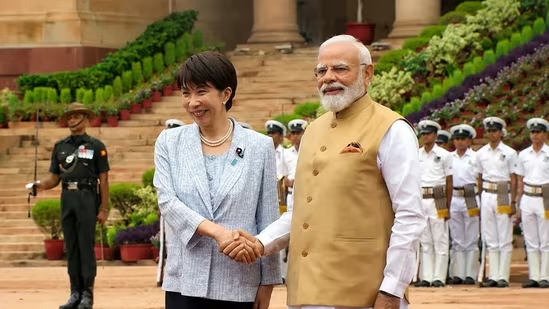
The gloves are finally off. Officially, the UAE cited “long-term strategic and economic vision, increased domestic energy production, and national interests.” In reality, the rift with Riyadh is writ large with a clash of economic ambition, regional primacy, and personal friction between MBS and MBZ. Abu Dhabi had already broken ranks with the GCC Customs Union in 2022 by signing a CEPA with India, followed by similar agreements with more than twenty other countries. The triggers were the chronic paralysis of GCC-led trade talks and Riyadh’s “regional headquarters” rule, which forced multinationals to relocate their MENA HQs to the kingdom to win major contracts there. This came at a cost to Dubai which is a natural favourite. The India–UAE CEPA has since pushed bilateral trade past $100 billion and paved the way for the India–Oman CEPA signed in 2025.

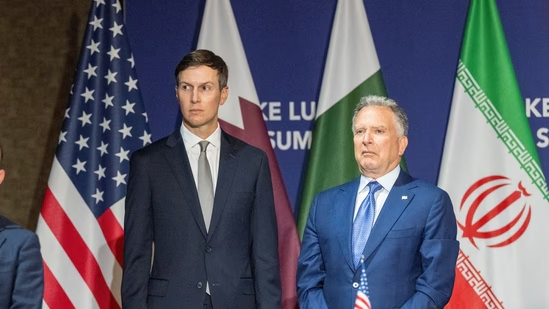
Backing rival parties in Sudan’s and Yemen’s civil wars has further strained ties: MBS dispatched a sharp letter to UAE National Security Adviser Sheikh Tahnoun over Sudan, and clashed openly with MBZ over Yemen. The UAE is also aggrieved that while Saudi interests are being factored into the Pakistani-mediated ceasefire initiative between the US and Iran, its own interests are not. The UAE fears that Riyadh will settle for weaker security guarantees than Abu Dhabi can accept.
India’s engagement with OPEC
India shifted course in 2015, choosing engagement with OPEC over avoidance. As the world’s third-largest oil consumer, importing over 85% of its crude, it sits firmly on the consumer side of the divide. With OPEC supplying the bulk of its oil, and India among the cartel’s most important growth markets, the two launched an annual ministerial dialogue in September 2015. At OPEC meetings in Vienna, India has consistently pressed for balance between producer and consumer interests and for “responsible pricing.” It has also long objected to the “Asian premium,” (the practice of Gulf producers charging Asian buyers more than Western ones) pushing back through both OPEC and bilateral channels. India’s close ties with the UAE will now strengthen its hand in securing supplies, and on better terms.
Conclusion
For once, President Trump had a point: in his 2018 UNGA address, he charged OPEC with “ripping off the rest of the world.” Unlike the earlier departures of Qatar, Angola, Ecuador and Indonesia, the UAE’s exit materially dents OPEC’s and Saudi Arabia’s bargaining power. It is too early to say whether Abu Dhabi will pull out of the GCC, Arab League or OIC, but its OPEC exit alone will redefine oil pricing and weaken the cartel. With Venezuelan output likely to rise and sanctions on Iranian oil likely to ease, supply dynamics are shifting. A truly free market in oil remains a moot point. But sustained downward pressure on prices over the medium to long term squarely serves the interests of major consumers like India.



