


























Strength training has often been misunderstood as something meant only for bodybuilders or people trying to bulk up. In reality, it plays a powerful role in weight loss and overall health. From lifting dumbbells to using resistance bands or even your own body weight, strength training challenges your muscles in a way that burns calories long after your workout is done. Unlike cardio, which mainly burns calories during exercise, strength training helps you build muscle and muscle keeps your metabolism active even at rest.
According to nutritionist and senior master fitness trainer Mitushi Ajmera, strength training is one of the most effective tools for sustainable fat loss, better body composition, and long-term metabolic health. The key lies in choosing the right exercises that work multiple muscle groups together.
Why does strength training work best for weight loss?
Strength training with progressive overload increases muscle mass, and muscle is metabolically active, meaning it burns more calories even at rest. “When it comes to choosing strength training exercises for weight loss, I recommend compound movements because they train multiple muscle groups at once, increasing caloric expenditure and hormonal response,” Ajmera tells Health Shots. Strength training also preserves lean body mass during weight loss, ensuring fat loss rather than muscle loss. It improves blood sugar control, reduces cravings, and supports hormonal balance.
Ajmera also explains that metabolism does not slow with age on its own. It slows due to muscle loss. Regular strength training helps prevent this, especially in women, keeping metabolism higher and helping the body look leaner, stronger, and healthier over time.
9 strength training exercises to support weight loss
1. Squats (bodyweight or weighted)
Squats engage the legs, glutes, and core together, making them highly effective for calorie burn and muscle building. They also improve mobility and lower-body strength.
How to perform squats: Stand with feet shoulder-width apart, push hips back, bend knees, lower until thighs are parallel to the floor, then push through heels to stand up.
How to perform weighted squats: Hold dumbbells or a barbell securely. Stand with feet shoulder-width apart, lower into a squat while keeping your core tight, and pause briefly at the bottom. Push through heels to return to standing.
2. Deadlifts
“Deadlifts work the glutes, hamstrings, back, and core, making them excellent for full-body strength and fat loss,” Ajmera tells Health Shots.
How to perform deadlifts: With a neutral spine, hinge at the hips, lower the weight toward the floor, then squeeze your glutes to return to standing.
3. Lunges or split squats
These improve balance, leg strength, and activate stabilizing muscles, increasing overall calorie burn.
How to perform lunges: Stand tall with feet hip-width apart. Step one leg forward and lower your body and bend both knees to about 90 degrees. Push through the front heel to return. Switch legs and repeat.
How to perform split squats: Stand with one foot forward and one back. Lower your body straight down and keep your torso upright and core engaged. Push through the front heel to rise. Complete reps before switching sides.
4. Hip thrusts or glute bridges
These target the glutes, a large muscle group that plays a key role in metabolism and posture.
How to perform hip thrusts: Sit with your upper back resting on a bench. Bend knees and place feet flat on the floor. Push hips upward by squeezing glutes and form a straight line from shoulders to knees. Lower hips slowly and repeat.
How to perform glute bridges: Lie on your back with knees bent. Place feet hip-width apart on the floor and press through heels to lift hips up. Squeeze glutes at the top and then lower hips slowly.
5. Horizontal push (push-ups or chest press)
“These exercises can strengthen chest, shoulders, and triceps while engaging the core,” suggests Ajmera.
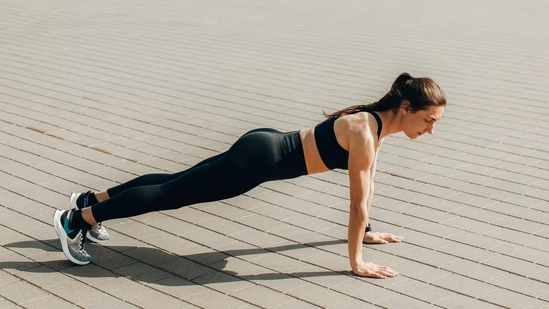
How to perform push-ups: Start in a plank position with hands under shoulders. Keep body in a straight line. Lower chest toward the floor. Push back up by extending arms. Repeat with controlled movement.
How to perform chest press: Lie on a bench or floor holding weights. Bend elbows and lower weights toward chest. Keep wrists aligned and core engaged. Press weights upward until arms extend. Lower slowly and repeat.
6. Horizontal pull (rows or suspended rows)
This exercise improves upper-back strength, posture, and balances pushing movements.
How to perform rows: Hold weights or a bar with arms extended. Pull weights toward your torso. Squeeze shoulder blades together. Keep back neutral and chest lifted. Lower slowly and repeat.
How to perform suspended rows: Hold suspension straps or bar. Lean back with arms extended. Pull chest toward handles. Keep body straight and core tight. Lower back with control.
7. Vertical push (Shoulder press or handstands)
This exercise builds shoulder strength and core stability while increasing overall muscle mass.
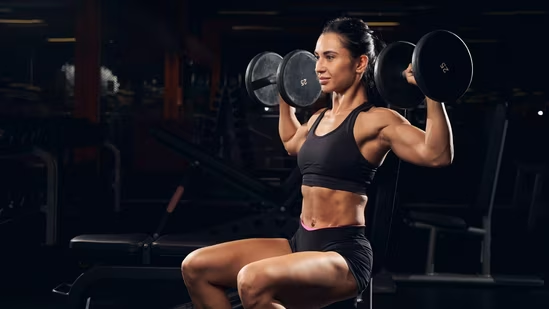
How to perform shoulder press: Hold weights at shoulder height. Engage core and keep spine neutral and press weights overhead. Lower slowly back to shoulders. Repeat with control.
How to perform handstands (wall-supported): Place hands firmly on the floor. Kick feet up against a wall. Keep core tight and shoulders engaged. Hold steady while breathing normally. Carefully come down.
8. Vertical pull (pull-ups, chin-ups, lat pulldowns)
It targets the back and arms, supporting upper-body strength and fat loss.
How to perform pull-ups: Grip bar with palms facing away. Hang with arms fully extended. Pull the chest toward the bar. Lower slowly with control. Repeat.
How to perform Chin-ups: Grip bar with palms facing toward you. Pull body upward using arms and back. Bring your chin above the bar. Lower slowly and repeat.
How to perform lat pulldowns: Sit at the machine and grip the bar. Pull bar down toward your chest. Squeeze shoulder blades together. Slowly return bar upward. Repeat.
9. Rotational and anti-rotational core exercises
Moves like Russian twists and loaded carries strengthen obliques and deep core muscles, supporting full-body stability.
How to perform Russian twists (rotational): Sit with knees bent and feet lifted or grounded. Hold the weight with both hands. Rotate the torso side to side. Keep your core tight throughout. Move in a controlled manner.
How to perform loaded carries (anti-rotational): Hold a weight in one or both hands. Walk forward with an upright posture. Keep your core engaged and resist leaning. Take steady, controlled steps.



