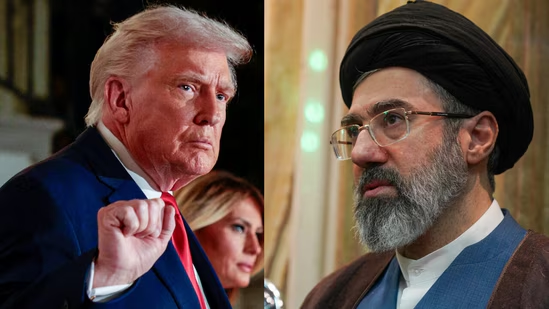
























US President Donald Trump on Wednesday claimed in a call with G7 leaders that Iran is ‘about to surrender,’ reported Axios, citing three people familiar with the contents of the virtual call.
However, about 24 hours later, Iran’s new supreme leader, Mojtaba Khamenei, issued his first public statement since taking office, vowing that the country would continue fighting.
The Iranian regime has shown no signs of imminent surrender or collapse and, on Day 14 of the war on Friday, appeared to be seeking greater leverage by threatening to choke off the Strait of Hormuz.
Khamenei delivered a series of warnings as the conflict involving the United States, Israel and Iran intensified. In a statement read out by a news anchor on Iranian state television, he said, “vengeance is priority ‘until fully achieved’.”
What Trump said on the G7 call
In the same call, Trump claimed that there were no officials left alive in Tehran to decide whether to continue the fight, according to Axios’ report.
“Nobody knows who the leader is, so there is no one who can announce surrender,” Trump said, according to two officials cited by the US-based news outlet, briefed on the call.
The report added that the US President also mocked UK Prime Minister Kier Starmer over his initial decision not to let the US use British military bases for the strikes on Iran, two officials briefed over the contents of the call added.
In front of other G7 leaders, Trump told Starmer that his help is no longer needed, “You should have proposed it before the war — now it is too late,” he added.
Notably, Starmer has offered to access the bases for defensive strikes once Iran began striking other Gulf countries in retaliation.
‘Underestimated’ impact on Strait of Hormuz
The Axios report follows an earlier report by CNN which said the administration of US President Donald Trump may have underestimated the chances of Iran attempting to shut down the strategic Strait of Hormuz in retaliation for US military strikes.
According to CNN, sources said that while planning the ongoing military operation, officials at the United States department of defense and the United States national security council did not fully anticipate that Iran would move to close the waterway, despite the US military having long maintained contingency plans for such a scenario.



