


























Fear of a gold price crash is making Indians sell old jewellery Gold prices are falling. Indians are rushing to sell old jewellery before rates drop further
Gold prices have fallen sharply from their record highs, and many Indian households are taking the opportunity to cash in.
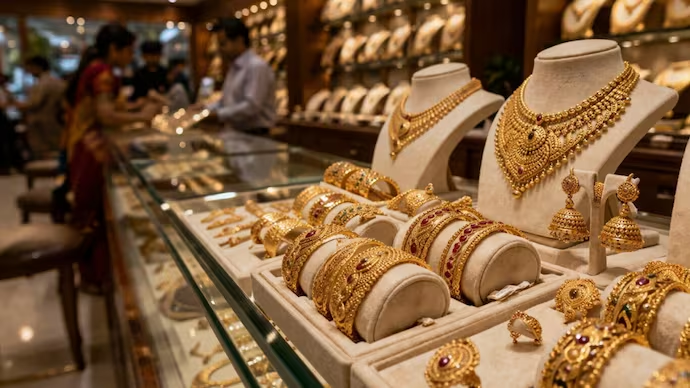
With MCX gold trading around Rs 1,44,199 per 10 grams on Friday morning, well below its all-time high, consumers are increasingly selling old jewellery instead of exchanging it for new ornaments. The fear is simple: if gold prices fall further, they may get less value for their jewellery.
According to the India Bullion & Jewellers Association (IBJA), Indian households sold nearly 50 tonnes of old gold during the April-June quarter, a 43% jump from a year ago, as many rushed to book profits.
WHY ARE PEOPLE SELLING GOLD?
Gold prices touched record highs earlier this year before witnessing a sharp correction in recent weeks.
Many consumers now believe prices may have peaked and could decline further.
According to the ET report, with gold recently trading around Rs 1.4 lakh per 10 grams and expectations in the market that prices could retreat to around Rs 1.2 lakh, households are choosing to monetise old jewellery rather than hold on to it.
“Indian consumers are leveraging the high price of gold for liquid cash,” Surendra Mehta, National Secretary at IBJA, told ET. He added that fears of a further correction are prompting many households to sell their gold and encash their gains.
GOLD UNDER PRESSURE GLOBALLY
The selling trend comes as gold prices remain under pressure in international markets.
Spot gold slipped on Monday as renewed tensions involving the US and Iran pushed crude oil prices higher, while expectations of further US Federal Reserve interest rate hikes weighed on the precious metal.
Higher interest rates generally reduce the appeal of gold because the metal does not offer any fixed returns, prompting investors to move towards interest-bearing assets.
RECYCLING BUSINESS GETS A BOOST
The surge in old gold sales is also benefiting India’s organised gold recycling industry.
Instead of lying idle in lockers, old jewellery is being brought back into the formal economy, refined into pure gold and supplied to jewellery manufacturers.
Muthoot Exim reported a 40% increase in old gold volumes across its network of more than 100 Gold Points.
“Consumers are becoming more comfortable monetising idle gold through organised and transparent channels,” Keyur Shah, CEO of Muthoot Exim, told ET.
WHY THIS MATTERS FOR INDIA
India is one of the world’s largest consumers of gold but imports most of the precious metal it uses.
According to the report, India imported gold worth around $72.4 billion in FY26. Recycled gold contributed an estimated 125-150 tonnes in 2025, and industry estimates suggest this could rise to 200-250 tonnes this year if the current trend continues.
With Indian households estimated to hold nearly 30,000 tonnes of gold, industry executives believe organised recycling can reduce the country’s dependence on imports while helping consumers unlock the value of idle assets.
SHOULD YOU SELL YOUR GOLD?
The recent surge in gold sales shows that many households are choosing to book profits after the record rally.
However, financial planners generally advise that the decision should depend on individual financial needs rather than short-term price movements.
For those who no longer use old jewellery, the current price levels may offer an opportunity to monetise idle assets. But for long-term investors, gold continues to play an important role as a hedge against inflation, geopolitical uncertainty and market volatility.



