




















Amid the interim peace deal and the recently concluded talks in Switzerland, Israel, which was also involved with the US in the war in Iran, is reportedly concerned that the Trump administration might be strengthening Tehran’s hand in Lebanon, from where Benjamin Netanyahu has refused to remove Israeli forces.
The war began with the US and Israel’s joint strikes on Iran in February 2026 and is now standing at a point where Washington is engaged in talks with Tehran, and Israel is strung in the middle with confusion over Lebanon.
The 14-point memorandum of understanding, signed by the US and Iran last week, includes a cessation of hostilities in Lebanon.
The very first point of the draft states: “The United States of America and the Islamic Republic of Iran and their allies in the current war are signing this MOU to declare the immediate and permanent termination of military operations on all fronts, including in Lebanon, and undertake from now on not to initiate any war or any military operation against each other, and to refrain from the threat or use of force against each other, and ensuring the territorial integrity and sovereignty of Lebanon.”
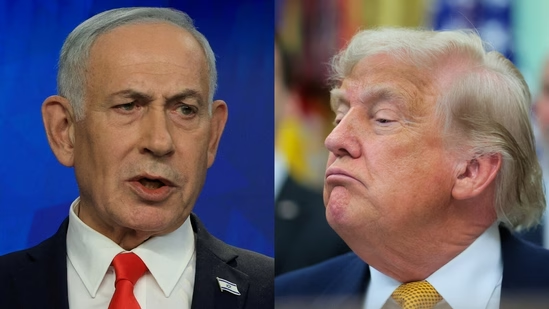
However, Netanyahu on Monday seemingly ignored the US-Iran MoU and said that Israeli forces will remain in South Lebanon for as long as he needs to protect his people.
With Iran and the US concluding technical talks in Switzerland on Tuesday, reports now suggest that Netanyahu’s government is concerned that the US might be strengthening Iran’s influence in Lebanon, potentially hampering Israel’s freedom to operate in the region, Axios reported, citing two Israeli sources.
‘Bibi is hysterical’
Israeli officials are reportedly worried that Trump’s new understandings with Iran would effectively undermine the collective efforts of Israel and the US to weaken the strength of the Iranian proxy outfit Hezbollah in Lebanon.
They are also worried that now Washington might object every time Israel plans to conduct a strike on Lebanon, along with pressure from Trump to withdraw Israeli forces from southern Lebanon.
According to the report, Israeli sources have claimed that the latest agreement between Iran and the US on Lebanon steps over the understandings reached between Netanyahu’s government and the Joe Biden-led US administration in 2024, a deal that was also blessed by Trump’s incoming government in 2025.
Netanyahu is reportedly much more worried about the Lebanon element of the US-Iran interim deal than the one about Iranian nuclear capabilities.
“Bibi is hysterical about it,” a source was quoted as saying by Axios.
In a bid to sway things in his favour, Netanyahu has reportedly asked his close confidant, Ron Dermer, a former member of his government, to urgently use his ties within Trump’s team and influence the US-Iran negotiations on Lebanon.
Trump’s post on Truth Social, threatening to hit Iran if it didn’t control Hezbollah, was reportedly prompted by Dermer’s involvement.
What was in the 2024 Israel-Lebanon agreement?
In 2024, the Biden administration brokered an agreement between Israel and Lebanon, wherein Tel Aviv retained its right to carry out attacks against Hezbollah if it violates the provisions of the ceasefire or poses a threat to Israel.
What was said about Israel-Lebanon in US-Iran talks Round 1
The first round of talks between Iran and the US in Bürgenstock, Switzerland, resulted in a decision to establish a de-escalation cell involving the Lebanese Republic and both sides, with Qatar and Pakistan acting as facilitators.
This cell is aimed at ensuring the “adherence of the termination of military operations in Lebanon as per the MoU.”
Lebanese President Joseph Aoun is reportedly willing to accept the new mechanism as long as it is led by Washington.
What US said about Israel’s concern over Lebanon
A senior US official reportedly said that Israel does not have to be concerned about the new mechanism for Lebanon, as Iran has been deeply involved in the region for decades.
Senator Lindsey Graham, one of Netanyahu’s closest allies in the US Congress, told Axios that Trump’s deconfliction mechanism doesn’t include Israel, and termed it a “major misstep”.
In reference to the talks between Israeli and Lebanese diplomats, which are mediated by US State Secretary Marco Rubio and his team, Graham claimed that the new US-Iran MoU’s elements concerning Lebanon undermine Rubio’s goal.
“To expect anyone to reach an agreement between Israel and Lebanon at the same time that Iran is demanding Lebanon be included in its own negotiations with the US is highly unrealistic,” Graham told Axios.
However, a senior US official contended that Rubio and his team are in the know of the deconfliction mechanism, arguing that it will help mediate between Israel and Lebanon.
Netanyahu’s refuses, Trump says he’ll ‘solve’ issue
On Monday, Israeli Prime Minister Benjamin Netanyahu said that as long as he needs to protect his people, his forces will remain in the security zone in South Lebanon.
To further affirm Israel’s stance on Lebanon, Netanyahu said that the US would act “exactly” the same way his country is acting now.
He cited an example of the US facing terror threats across its borders and said, “You know well what America would do. It would cross the border, create a security zone, kill the terrorists and protect its people until the threat is removed. That’s exactly what we are doing.”
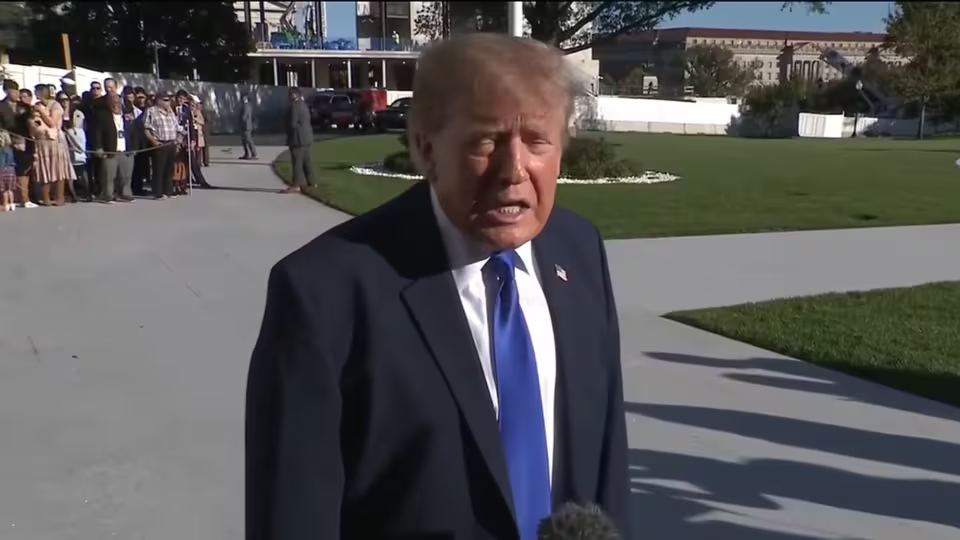
US President Donald Trump responded to Netanyahu’s remarks, saying he would “solve” the issue.
“I’m not going to tell you what I’m going to do, but it gets solved. I’m a problem solver. I get problems solved real fast, including with Bibi,” Trump said when asked how he would ensure that Israel’s actions won’t hamper US-Iran negotiations.



