



















India’s Directorate General of Civil Aviation (DGCA) finally had to walk back on norms, including improved duty hours and leave policy for pilots, on Friday, December 5, after the country’s dominant airline, IndiGo, continued to have mass cancellations.
How the flight mess unfolded over the past week
December 5 was the fourth day of the chaos, and it began with all IndiGo flights from the national capital Delhi being cancelled.
By the afternoon, the government regulator DGCA retracted the new Flight Duty Time Limitations (FDTL) that had come into effect from November 1, terming it to be a “temporary one time extension”.
Since IndiGo controls majority of the air travel sector in India, and has persistent staffing trouble, the problem gained scale starting December 2. Other airlines such as Air India and Akasa Air saw limited issues; their relatively smaller sizes also cushioned the impact.
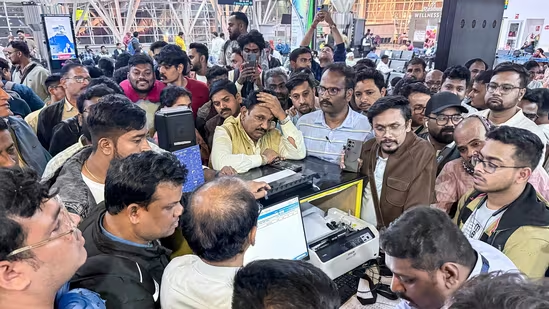
IndiGo flights that were cancelled crossed the 1,000 mark total over the past four days. The cities hit included major ones like Delhi, Bengaluru and Hyderabad, besides smaller cities and towns, including Patna, Chandigarh, Bodh Gaya, among others.
Passengers in some cases checked-in their luggage; then their flight was cancelled, and they had to wait hours just to get their bags back. In at least one case reported by a TV channel, a woman said she was sent home by the IndiGo staff telling her the flight was cancelled, only to later get a call from the boarding gate that she had minutes to get onto the plane.
Cancellations of flights meant cancellations of weddings, too, as this is the peak travel season for family gatherings and holidays too.
Civil aviation minister Ram Mohan Naidu said on December 4night that he had “reviewed” the operations of IndiGo. “I have instructed the DGCA and concerned officials at the Ministry to keep a close watch on the network and directed Indigo to normalize the operations at the earliest,” he posted.
The mess got worse the next morning, and the government had to step in with a u-turn.
What about the norms now?
Under the now-revised FDTL framework, the regulator has replaced the rule that said “no leave shall be substituted for weekly rest”. The original rule required airlines to provide weekly rest and leave as separate entitlements; this was to tackle pilot fatigue, thus prioritise safety.
But, in an internal communication on December 5, the regulator attributed the relaxation — in this rule and reportedly some other norms too — was prompted by “ongoing operational disruptions”. Multiple industry representations had sought flexibility to maintain continuity and stability in flight schedules, it argued for its decision to ease the rules for now.
The clauses exempted include requirements related to night duty (0000–0500) and operations that encroach into night duty, too.
Weather, weddings, fog: DGCA appeal to pilots
The regulator also issued an appeal to pilot associations. DGCA chief Faiz Ahmed Kidwai said in the letter that the aviation sector is under “significant strain”.
“As we now approach the fog season, the peak holiday period, and the marriage travel season, it is crucial that the industry prepares for even greater operational challenges. Passenger volumes are expected to rise sharply, and weather-related impacts may further complicate scheduling and flight safety. Given this situation, we earnestly request the full cooperation of all pilot bodies, associations, and Pilots across India,” the DGCA’s letter read.
Strengthening coordination between pilots and airlines during this period is “indispensable,” the regulator said.
‘Govt succumbed to airline pressure’
The DGCA did reaffirming its commitment to enforcing the FDTL norms “in letter and spirit” — meaning, pilots’ concerns about duty hours and off days/leave remain on the discussion table.
“The government clearly succumbed to airline pressure, something extremely unbecoming with one of Asia’s leading civil aviation regulators,” Mark Martin, a sector expert, told HT.
“After the AI 171 crash (in Ahmedabad), Indian civil aviation is on the world’s watch list. For the DGCA to go back on a well-structured safety regulation on crew fatigue will have global repercussions, and backlash from pilots, pilot unions and pressure groups at large,” Martin added.



