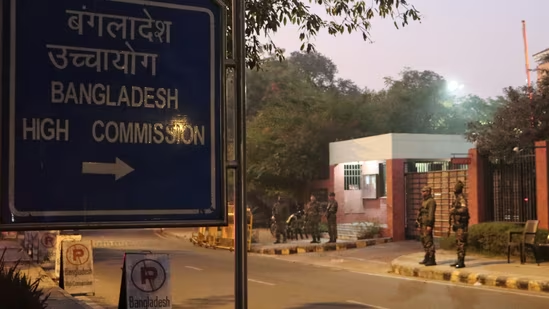




















Bangladesh foreign ministry on Tuesday summoned Indian envoy over security of Bangladeshi missions. The move comes after groups of protesters held demonstrations recently outside the two Bangladeshi missions – in New Delhi and West Bengal’s Siliguri.
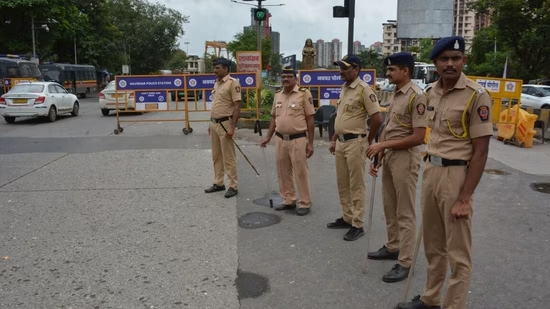
Parallely, a massive protest was underway by members of Vishva Hindu Parishad and other Hindu organisations near the Bangladesh High Commission in Delhi over the alleged atrocities against Hindus and the mob lynching of Dipu Chandra Das in Bangladesh. Visuals from the agitation showed protesters breaching barricades, prompting police to resort to lathi-charge to bring the situation under control.
“Bangladesh condemns such acts of premeditated violence or intimidation against diplomatic establishments, which not only endanger the safety of diplomatic personnel but also undermine the principles of mutual respect and values of peace and tolerance”, Bangladesh foreign ministry said in a statement on Tuesday.
Ties between India and Bangladesh have taken a hit for various reasons, all of which are directly or indirectly linked to ousted former Bangladeshi prime minister Sheikh Hasina’s exile in New Delhi.
Sheikh Hasina was last month sentenced to death by a Bangladeshi court for her involvement in the deadly violence in the student-led uprising in 2024.
After the sentence, India responded saying that it “remains committed to peace, democracy, inclusion and stability in Bangladesh”, while Dhaka has been seeking handing over of the ‘fugitive’ former PM by India.
India-Bangladesh tensions
Relations turned worse after India last week summoned Bangladesh high commissioner Riaz Hamidullah and registered a protest over the deteriorating security environment in the neighbouring country and plans by extremist elements that could affect the security of the Indian mission in Dhaka.
People familiar with the matter said one of the triggers for the summoning of the Bangladeshi envoy was a fiery speech on Monday by National Citizen Party (NCP) leader Hasnat Abdullah, who contended that Bangladesh can shelter separatist forces from India and sever the seven northeastern states – also known as the “seven sisters – from the rest of the country.
Abdullah, one of the key student leaders who led the protests against Hasina, was speaking at an event organised in Dhaka by Inqilab Mancha, the party whose leader Sharif Osman Hadi is in a critical condition after being shot by unidentified gunmen on December 12.
Hadi died during treatment on December 18 in Singapore.
Hadi’s death sparked massive uproar in Bangladesh, with mob taking to the streets and setting afire offices of news organisations. On Monday, another student leader – Motaleb Sikder – was shot at by unidentified gunmen.
The incidents Bangladesh cited while summoning the Indian envoy include what the country claimed was vandalism at the Bangladesh Visa Centre in Siliguri on December 22, and a protest outside the Bangladesh High Commission in New Delhi on December 20.
India on Sunday dismissed “misleading propaganda” in sections of the Bangladeshi media over a demonstration in front of the Bangladesh High Commission in New Delhi against the “horrendous killing” of Hindu youth, and said the protest was brief and posed no security threat.
Bangladesh has also reportedly suspended visa operations in Delhi and Siliguri, citing security concerns. The assistant high commission of Bangladesh in Tripura also made a similar announcement on the suspension of visa services after protests were held outside the mission on Sunday, reports said.



