




























As the year draws to a close, many people find themselves dealing with tired, dry eyes, frequent headaches, and occasional blurry vision – classic signs of digital eye strain. Months of accumulated screen time, combined with dry winter air, indoor heating, and rising pollution levels, can place added stress on the eyes, worsening discomfort towards the end of the year.
Addressing these issues at earliest is essential, not only to relieve existing symptoms but also to start the new year with healthier, more comfortable vision.
Dr Priyanka Singh, consultant ophthalmologist and eye surgeon at Neytra Eye Centre, New Delhi, spoke to HT Lifestyle about the rise in eye complaints as the year draws to a close and shared practical ways to improve eye health by addressing the problems caused by screen-related eye fatigue.
She emphasises, “Prolonged screen exposure throughout the year along with poor posture and neglecting to take breaks, puts strain around the eye, and surrounding muscles. But before heading into the new year, doing a year-end ‘eye detox’ to reset and restore vision comfort is a simple way to end the year.”
Decreased rate of blinking
According to Dr Singh, one of the primary causes of eye fatigue related to screen time is the decreased rate of blinking, which can result in drier eyes and can also lead to more pronounced symptoms like burning or irritation. She recommends being more mindful of blinking and taking regular screen breaks to allow the eyes to rest.
She suggests, “One of the best habits people can adopt to avoid eye fatigue is the 20-20-20 rule. Taking time to look at an object 20 feet in the distance every 20 minutes for 20 seconds. This does wonders to help eye muscles relax and reduce the resulting strain.”
Screen distance and lighting
Dr Singh highlights another frequent complaint seen in eye clinics – the lack of proper screen distance and lighting. She explains that when screens are positioned too far away or placed too high, users may experience increased eye strain and visual fatigue as the eyes work harder to focus.
The eye surgeon emphasises, “There is an increase in overall eye comfort if brightness is adjusted, screens are kept at eye level, and anti-glare screens are used. Warm eye compresses can help increase blood flow to chronically overworked muscles of the eye and reduce overall fatigue.”
Dry eyes
The eye surgeon notes that dry eye complaints rise sharply at the end of the year, largely due to sustained screen exposure throughout the year and the widespread use of indoor heaters during winter, which dries the air and exacerbates symptoms.
In order to counter this, Dr Singh recommends, “Increasing your fluid intake, getting adequate vitamin A, D and E, Omega-3 rich foods, and using eye lubricants can all help keep screens less irritating.”
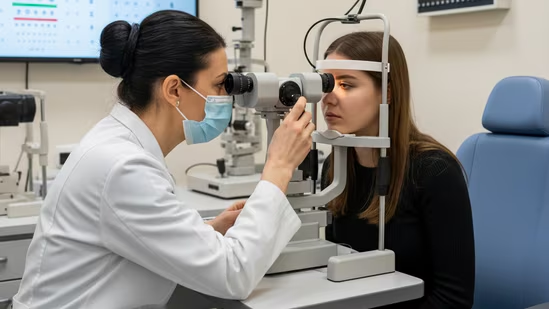
Ultimately, Dr Singh highlights the importance of avoiding self-medication with over-the-counter remedies and seeking timely medical attention to address early symptoms and unresolved issues such as persistent headaches and eye fatigue.
She concludes, “Avoid self medication. We have seen patients coming to us when the eye condition has worsened. Many individuals ignore early symptoms of eye diseases and often self-medicate with over-the-counter medicines. This approach is harmful and can cause serious damage and vision loss. Eye assessment is essential before the year closes. Unresolved headaches, constant eye rubbing, or unsteady sight may denote unaddressed sight issues or dryer eyes that may be worsening.”



