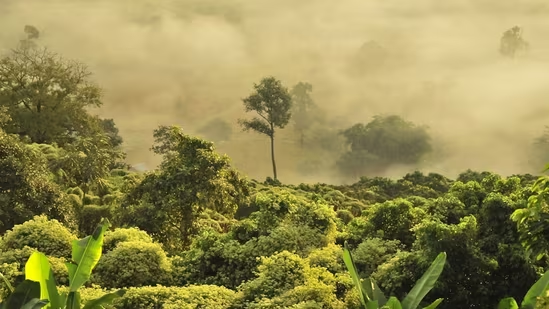
























Forest fires in the Brazilian Amazon fell to a historic low in 2025 after peaking the previous year, according to a report published Tuesday.
The data gathered by environmental monitoring network MapBiomas will come as good news for leftist President Luiz Inacio Lula da Silva ahead of seeking reelection in October.
Flames engulfed the world’s largest tropical rainforest in 2024 when an unprecedented drought triggered the spread of fires, the majority of which were man-made.
Burned area lowest since 1985
Using satellite images, MapBiomas found that last year saw a reversal of the critical situation, with 3.1 million hectares (7.7 million acres) burned — the smallest area since records began in 1985.
Fires eased off across the country as well, with burned areas nationwide at their smallest since 2018.
The decline was “out of the ordinary,” geographer and report coordinator Ane Alencar told reporters.
A delayed rainy season between 2024 and 2025 blocked the emergence of the “ideal window for burning in certain areas” where fire is used to clear agricultural land, Alencar said.
Poorly managed fires of this type are exacerbated by illicit practices such as deforestation, which is common in areas where illegal mining occurs.
Deforestation also eased off last year, MapBiomas said, which drastically reduces the amount of fuel available to start fires.
The report highlighted the “psychological factor” among communities who feared a fire season like 2024 and therefore helped control any outbreaks.
Fewer fires, it said, “interrupts a sequence of years of fire expansion and returns the country to a historically lower level of burned area.”
Cerrado savanna continues to face fires
Central Brazil’s vast Cerrado savanna, however, “kept burning” at similar rates, Alencar said.
‘Super El Nino’ threat
She also flagged the potential arrival of a “super El Nino” this year, referring to a climate phenomenon that brings “an extended dry season and a greater risk of forest fires.”
Protecting the Amazon is crucial to combat climate change, since its dense vegetation absorbs the greenhouse gases that cause global warming.
Official data from the first quarter of 2026 shows that deforestation is at its lowest-ever rate this decade, with Lula pledging to eradicate the practice by 2030.
The leftist leader is looking to nab a fourth non-consecutive term in office in October elections, partly by championing environmental causes.
But his decision to endorse a major offshore oil exploration project off the coast of the Amazon has garnered virulent criticism from activists.



