










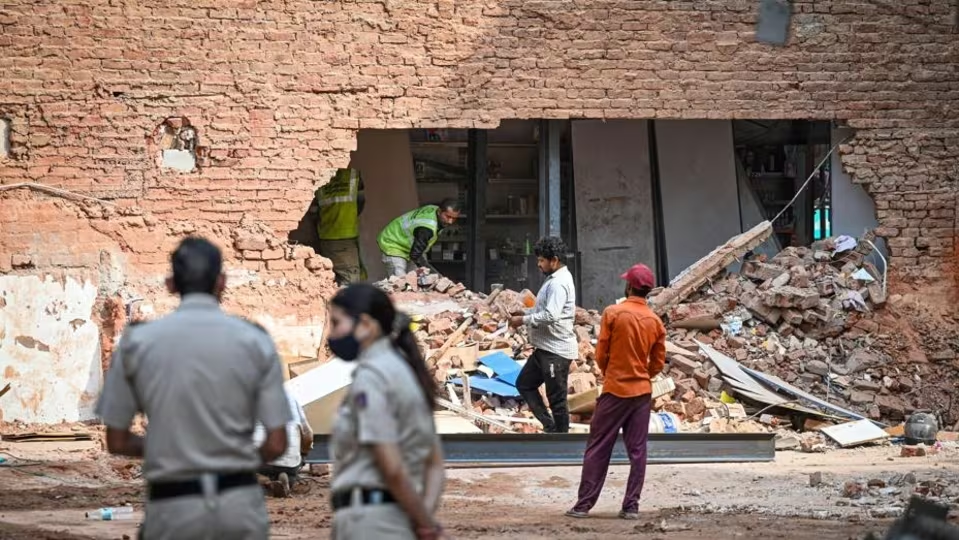



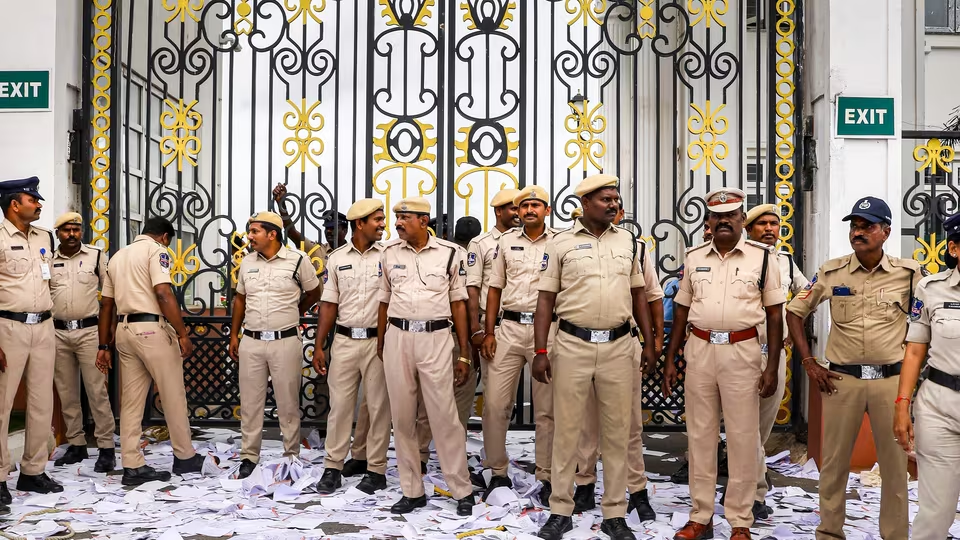




The Delhi Police have registered four cases, including one related to a larger criminal conspiracy, and are in the process of filing two more in connection with the violence during the Cockroach Janta Party (CJP) march to Parliament on Monday, officers aware of the matter said on Tuesday.
One of the cases pertains to the unauthorised flying of a drone in New Delhi, a high-security zone, when aerial activity is heavily restricted during the Parliament session. Another relates to an alleged conspiracy to incite violence. Investigators claimed to have gathered “significant evidence” during the probe, although they declined to share details, citing the ongoing investigation.
Two other cases have been registered for obstructing public servants from discharging their duties, assaulting police personnel, and damaging government property during the protests.
Police said two more cases are likely to be registered under Bharatiya Nyaya Sanhita for assault, including one about taking the law into one’s own hands. The cases have been registered at Connaught Place, Parliament Street, and Kartavya Path police stations.
The First Information Reports also invoke the Arms Act for alleged possession of prohibited weapons. Police alleged protestors assembled unlawfully, disrupted public order, obstructed government officials, indulged in violence, and damaged public property.
No arrests have been made. Police said further legal action would be taken based on the evidence collected during the investigation.
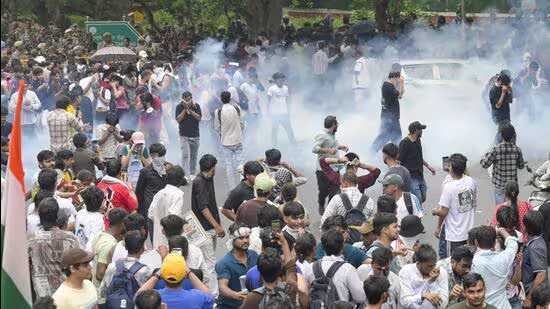
Tens of thousands of agitators marched to Parliament in central Delhi on Monday demanding the resignation of Union education minister Dharmendra Pradhan over repeated paper leaks and exam irregularities, after a 23-day-old sit-in hunger strike at Jantar Mantar. They braved police batons and tear gas.
The protesters toppled barricades to advance deeper and march to Parliament, just over a kilometre away from Jantar Mantar, prompting the Central Industrial Security Force to seal the gates of the Parliament complex for the first time since the 2001 attack. Commandos took up positions with automatic weapons, sparking a controversy.
The Delhi Police said the planned but unauthorised march to Parliament was handled “professionally,” but visuals showed security personnel in full riot gear thrashing young unarmed protesters.
The CJP was formed after Chief Justice of India Surya Kant’s remarks referring to some people as “cockroaches” and “parasites. He maintained that his remarks were not directed at the youth of the country but at individuals who entered professions such as law and media using “fake and bogus degrees”.
The CJP garnered millions of followers on social media before launching a sit-in protest on June 6 demanding Pradhan’s resignation over repeated question paper leaks. The hunger strike and forcible removal of activist Sonam Wangchuk last week galvanised the movement.
Crowds swelled through the weekend, and by Monday morning, students, first-time agitators and young professionals defied heavy police barricading to join the protest.
Officials admitted they had underestimated the strength of the gathering and put it at about 35,000. Protesters and eyewitnesses said the number was at least twice as much. Roughly 2,000 police personnel and 20 companies of paramilitary forces were deployed.
Delhi Police said 118 personnel, including senior officers, were wounded. The exact number of injured protesters was not immediately known. Reports said the wounded could be in the hundreds. Officials at one government hospital confirmed “at least 100” protesters being treated for injuries. The police put the number of injured protesters at 60.



