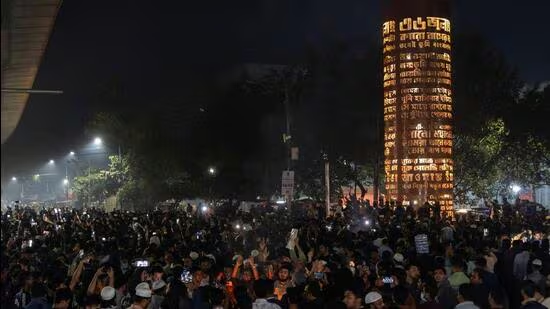




















Fresh protests erupted near the Indian mission in the western Bangladeshi city of Rajshahi on Friday, hours after a large crowd attempting to storm the assistant high commission in southern Chittagong was pushed back by security forces.
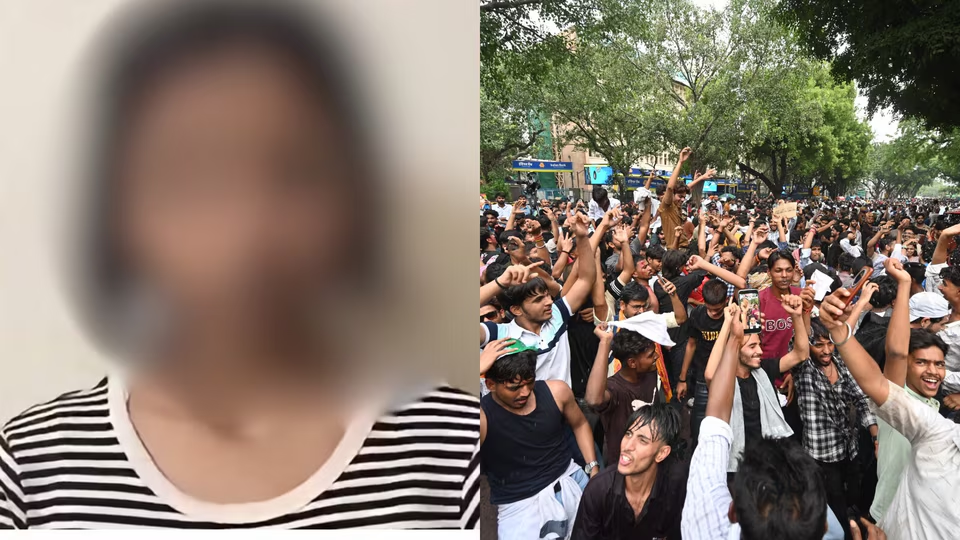
Bangladesh has witnessed protests near the Indian high commission in Dhaka and the assistant high commissions in Chittagong, Khulna and Rajshahi over the past few days as demonstrators took to the streets over a deadly attack on radical student leader Sharif Osman Hadi last week. The protests intensified after Hadi died in a Singapore hospital on Thursday.
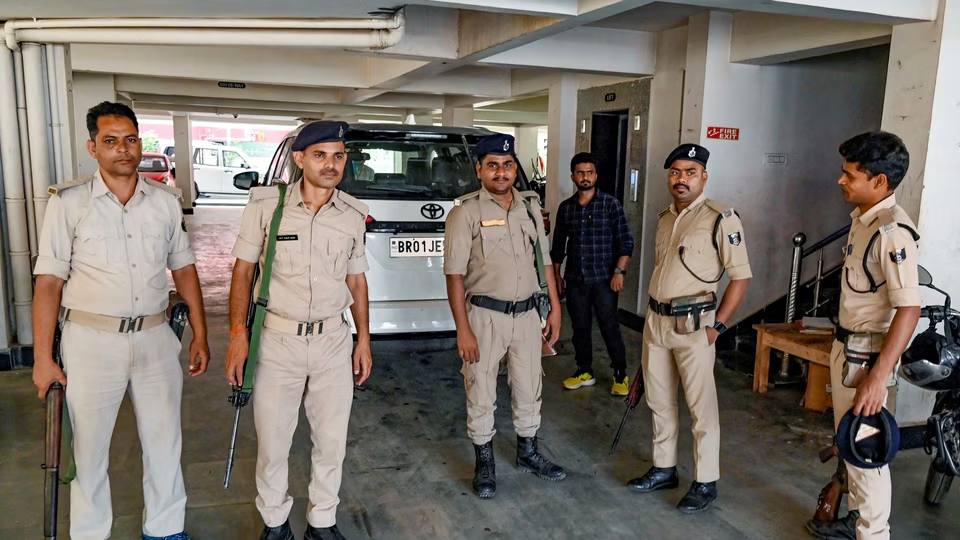
People familiar with the matter described the situation outside the Indian mission and posts in Bangladesh as tense and, on condition of anonymity, said that all Indian diplomats and officials were safe.
Bangladesh police and security forces had failed to take timely action against protestors over the last few days, including in Chittagong on Thursday, and only stepped in after they got close to the missions, they said.
On Wednesday, Bangladesh high commissioner Riaz Hamidullah was summoned to the external affairs ministry to protest the deteriorating security environment in the neighbouring country and the threat posed by extremist elements to the security of the Indian mission in Dhaka. Hamidullah was told that India expects the interim government to ensure the safety of missions and posts in Bangladesh in keeping with diplomatic obligations.
Indian authorities are also gearing up for sustained protests after the Friday prayers, and there are apprehensions that the situation could worsen once Hadi’s body is flown into Bangladesh from Singapore, where he was taken for treatment after being shot in Dhaka on December 12.
Student groups involved in the protests have sought to link the Awami League party of former premier Sheikh Hasina, currently in self-exile in India, to Hadi’s killing, though no evidence has emerged in this regard.
Four people, including two police personnel, were injured in a clash between protesters and police outside the Indian assistant high commission in Chittagong late on Thursday. The protestors lobbed bricks and vandalised the premises, Bangladesh’s UNB news agency reported. Police also detained 12 people under the Anti-Terrorism Act, officials said.

On Thursday, tensions flared when police blocked a march towards the Indian assistant high commission in Rajshahi, leading to brief scuffles between protesters and security forces. The people cited above said radical and anti-India forces were more active in Rajshahi, increasing the potential for protests.
“The authorities have not stepped in to quell unsubstantiated reports of an Indian link to Hadi’s killing and have created this situation,” one of the people said.
Bangladesh’s interim government, which has announced a day of state mourning on Saturday over Hadi’s death, on Friday urged people to “resist all forms of mob violence committed by a few fringe elements”. While condemning all acts of violence, intimidation and arson, the caretaker setup led by Muhammad Yunus said in a statement that a democratic transition “must not…be derailed by those few who thrive on chaos and reject peace”.
Referring to the general election and constitutional referendum scheduled for February 12, the interim government described the exercises as a “solemn national commitment” and called for honouring Hadi through restraint and rejecting hatred.
The interim government also condemned the lynching of a Hindu man in Mymensingh. “There is no space for such violence in new Bangladesh. The perpetrators of this heinous crime will not be spared,” the statement said.
Dipu Chandra Das, a 30-year-old garment factory worker, was beaten to death in Bhaluka area of Mymensingh on Thursday night by a mob that accused him of blasphemy. His body was tied to a tree and set on fire, BBC Bangla reported.



