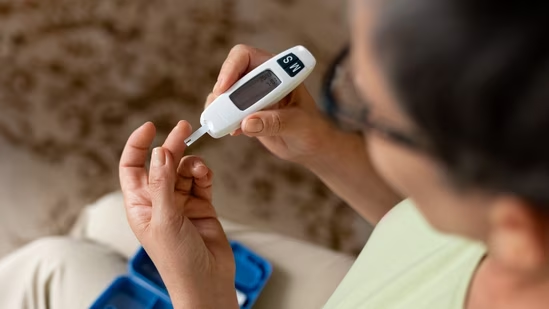





























Diabetes is often underestimated, with many people ignoring its long-term impact until complications arise. Lifestyle choices, diet, and regular physical activity play a crucial role in keeping the condition under control. In her January 24 Instagram post, 49-year-old Sumedha Milind Gaur, who has been living with diabetes, shared her personal journey, explaining why it is essential to take the condition seriously and make fitness a priority.
Why Sumedha exercise even at odd hours
Explaining why she exercises even at odd hours, Sumedha revealed the discipline diabetes has forced her to build. “It’s 1:29 am, and I’ve just finished climbing 80 floors. You may wonder why I’m doing this at such an ungodly hour. It’s because I get free very late, and I can’t afford to ignore it or make excuses,” she said.
According to her, skipping exercise even once can become a dangerous habit. “One excuse turns into another, and before you know it, you lose the habit of exercising. I can’t afford that.”
What happens when diabetes is not taken seriously
Sumedha admitted that she herself had ignored diabetes for years. “I was exactly where many of you are. For three years, I never took my diabetes seriously. My sugar levels used to touch 300, 350, even 450, and I refused to go on medication,” she shared. Even when she eventually started medicines, the lack of lifestyle changes caught up with her. “My sugar came down from 300 to 200, but I still didn’t exercise, and that landed me in the hospital.”
It was during that health scare that reality hit hard. “That’s when I researched, read, and understood that doctors weren’t joking when they called diabetes a slow, silent killer. It destroys your organs quietly,” she said.
Sumedha explained that diabetes is deceptive because it doesn’t cause immediate discomfort. “For the first 10 years, it doesn’t trouble you. You don’t feel sick, so you don’t take it seriously. And by the time you do, everything is in disarray, medications increase, HbA1c rises, because you wasted the years when you could have controlled it.”
How uncontrolled diabetes impact family members
Beyond personal health, she stressed how unmanaged diabetes affects loved ones. “It’s your life, you can live it your way. But we’re not alone. Our families suffer emotionally when they see us in pain, physically when they run to hospitals with us, and financially because diabetes is not a cheap disease. Why should they suffer because of our choices?”
Sumedha ended her message with a reminder that managing diabetes isn’t impossible. “It’s really not that difficult. Eat a little less, cut down oil and fats, eat more fibre, reduce sugar, move a little. These are small changes, but they can save your life.”



